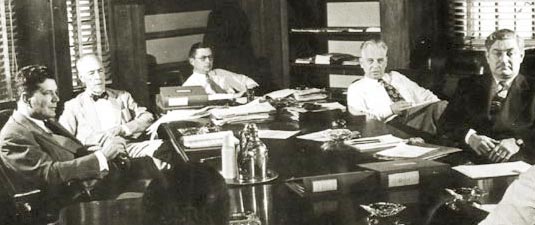
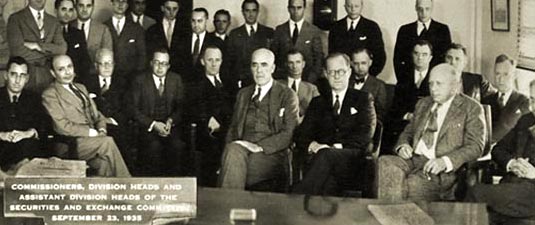
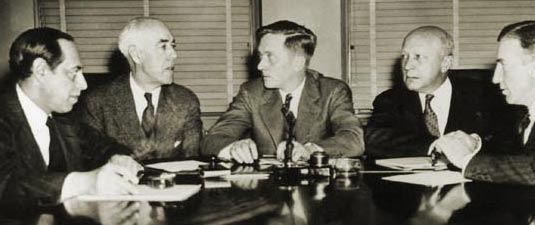
The galleries provide an alternate way - in addition to the search function - to easily access materials from throughout the museum collections on a particular topic. You do not need to leave a gallery to select any related resource; click on the link and the material will be available.
Galleries are built by an academic curator; the curator's essay provides a framework for the related museum resources.
Written and Curated by Dr. Felice Batlan
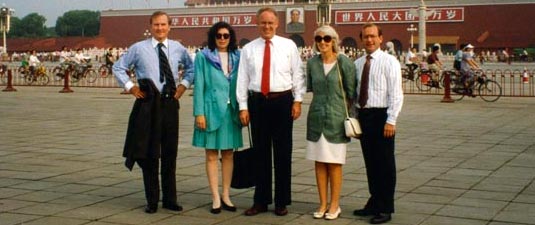
"The SEC continually asserted that the United States had the best securities laws in the world and that other countries needed to adopt a similar regime. How the SEC confronted ...various issues [of its jurisdiction] would change over time, as the economic, military and cultural power of the United States ebbed and flowed." (from the Introduction)
Written and Curated by Dr. Kurt Hohenstein
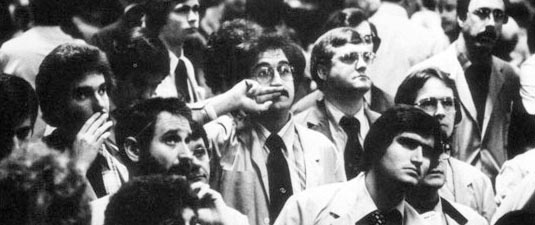
"Between 1961 and 1973, the SEC faced challenges to its institutional authority on a wide array of complicated and pressing issues. The story of how the SEC addressed those issues would be an uneven one, with setbacks to the SEC's bright image that it had not faced in its previous thirty years of existence." (from the Introduction)
Written and Curated by Dr. Kurt Hohenstein
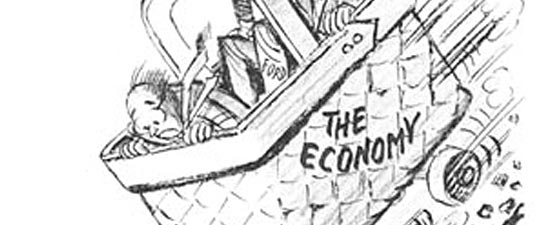
"The history of SEC efforts to regulate insider trading is a story of administrative resiliency, intellectual flexibility and institutional competence that created the modern system of insider trading enforcement despite the absence of a specific legal definition of the practice." (from the Introduction)
Curated by Dr. Kenneth Durr and Dr. Adrian Kinnane, History Associates, Inc.
Development made possible, in part, by the Joseph P. Kennedy, Jr. Foundation
"Subsequent SEC chairs wielded the power of an established regulatory agency with varying degrees of success, but only after Kennedy had proven to a nation that the SEC could be a critical source of stability in the constantly changing world of finance." (from the Introduction)
Written and Curated by Dr. Kurt Hohenstein
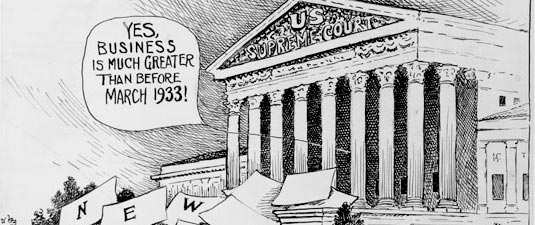
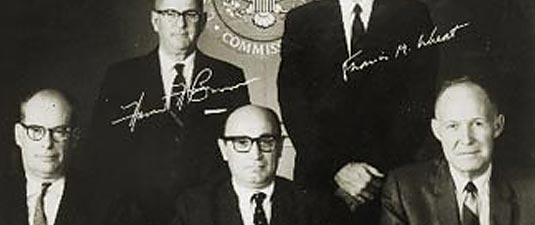
"While [Douglas's] tenure coincided with great challenges to the emerging authority of the rise of administrative government during the New Deal, his political leadership and activism at the SEC, coupled with his academic brilliance by which he formulated that policy framework, made the SEC the most lasting and successful of all New Deal agencies." (from the Introduction)
(copyright) 2002-2009 Securities and Exchange Commission Historical Society