
Lacking the resources required to police the securities industry on its own, the Commission had long sought to compel market participants to prevent and detect violations, to effectively supervise employees, to act in the best interests of investors, and, in the IA/IC sector, to uphold fiduciary obligations. But it was a failure in the broker-dealer sector that convinced an activist chair to promote a new model of self-policing and create a new office in the Commission.
Compliance and Origin

After taking over in 1993, Arthur Levitt noted a number of problems with the SEC exam program. First, there was little vitality. Within the divisions, the exam function was usually subordinate to the rule-making function, and this diminished examiner independence, assertiveness, and focus. Levitt, said John Walsh, wanted “more people focusing exclusively on exams for their own sake.”(23)
With examinations relegated to second-tier status in the divisions, expertise suffered as well. Recent inspections of market maker Bernard Madoff and electronic exchange Instinet had suffered because examiners lacked the ability to effectively probe complex entities.(24) But it was the odd-eighths scandal, which the Division of Market Regulation had failed to detect, that prompted Levitt to act.
An ad hoc “Reorganization Group,” led by senior counsel Carrie Dwyer, had already shaken up the SEC regional structure. Dwyer now pushed for an independent examination division with “more professional management and higher priority resources.”(25) The existing divisions opposed creating a new division, so the Reorganization Group compromised on an office, considered to be a step down from a division. At first the new entity was dubbed “OSIE”—the Office of Securities Industry Examinations.(26) But Levitt and his team soon added a new element to that formulation, compliance.
For the broker-dealer industry, the duty to supervise was seen as a frustrating bare minimum standard, and sales practice abuse by brokers remained far too common. Compliance involved taking a comprehensive view of legal obligations and creating an ongoing system of control to ensure that these were met. Compliance emerged in the largest corporations during the 1960s and was codified in the internal controls requirement of the Foreign Corrupt Practices Act in the 1970s. In the 1990s, the US Sentencing Commission laid out a “program to prevent and detect violations of law.”(27) For the SEC, compliance promised to establish a kind of self-regulation within the IA/IC realm. “We focused on compliance,” Director of the Division of Investment Management Barry Barbash recalled, “and wanted the industry to be involved more in compliance, largely because of resource considerations.”(28)
OSIE, therefore, became the Office of Compliance Inspections and Examinations (OCIE). To run it, Levitt wanted someone familiar with the existing exam program but with enough distance from it to be able to innovate. Lori Richards started as an enforcement attorney in the Los Angeles Regional Office and later became Associate Regional Director and acting director of the San Francisco District Office. Richards had brought numerous enforcement actions including the complex Steven Wymer investment adviser fraud case. After a stint as the chairman’s Executive Assistant, Richards became the first OCIE Director. Another Levitt counsel, John Walsh, was named its Chief Counsel.
On May 1, 1995, OCIE’s disparate staff came together on the newly-renovated ninth floor at 450 Fifth Street. The fresh quarters reflected the attitude of OCIE leaders—they were starting a new venture with a clean slate. One of the first steps was to create a tripartite mission statement: OCIE resolved to be independent, to find facts without compromise, and to be guided solely by the protection of investors and their interests.
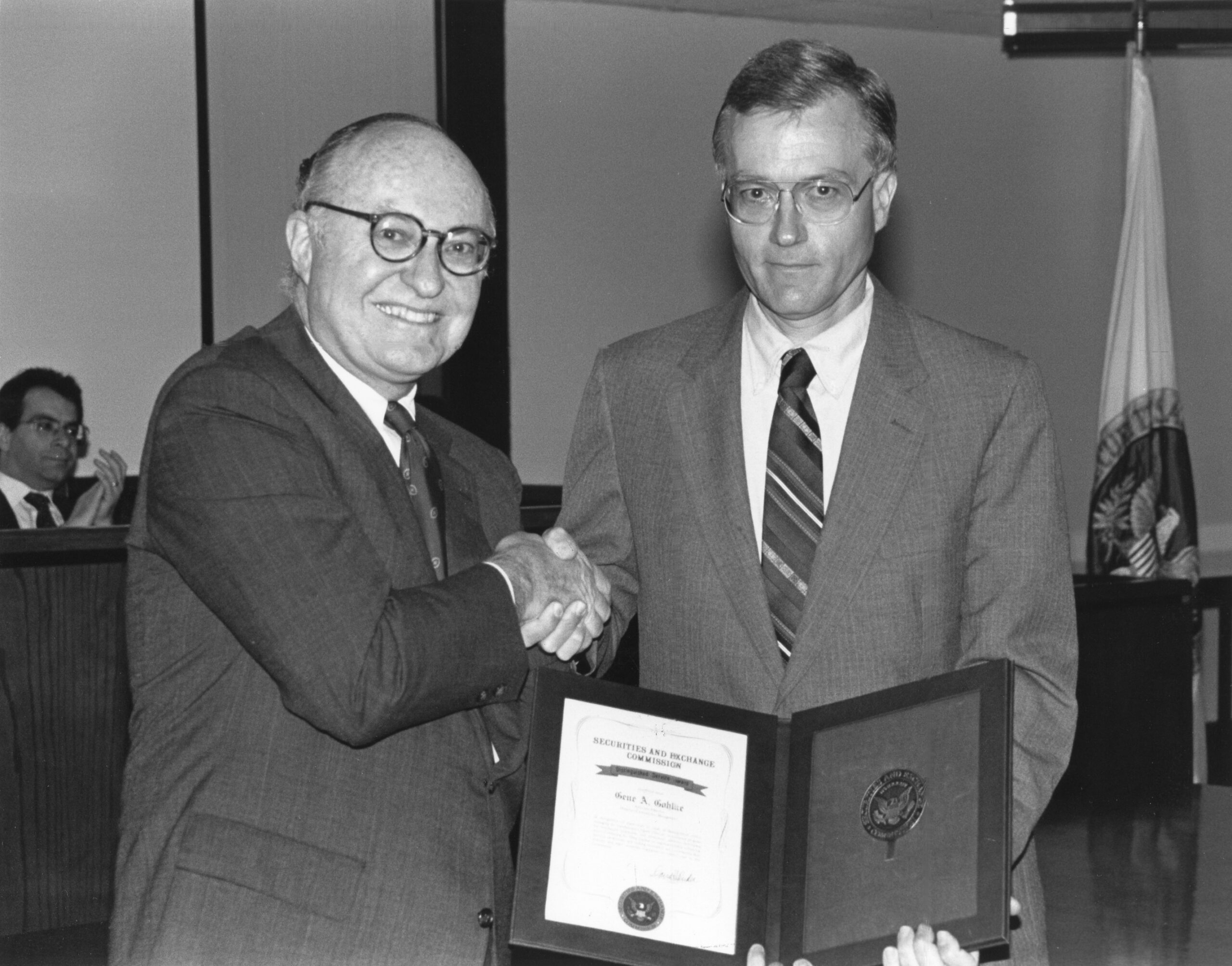
But it was not entirely a fresh start, because creating OCIE involved disrupting old arrangements and reassigning longstanding personnel. Gene Gohlke, who came from Division of Investment Management to lead the IA/IC group in OCIE, remembered the transition as a time of “wrenching change,” the effects of which he tried to mitigate by remaining in close touch with former colleagues.(29) Mary Ann Gadziala, who came from the Division of Market Regulation to lead the OCIE broker-dealer program, did the same. Industry participants viewed the new office with skepticism; the most common concern was that rather than aligning with rule makers in the Divisions of Investment Management and Market Regulation, OCIE would serve as an arm of the Division of Enforcement. Some in the divisions, meanwhile, grumbled that they had lost their “eyes on what was going on in the industry.”(30)
The transition was easier in the regions. OCIE had “program supervision,” but examination staff still worked for regional administrators. Indeed, Walsh advocated preserving a measure of autonomy so that regions could innovate. Midwest Regional Administrator Mary Keefe recalled OCIE telling regional examiners, “Give us your best practices and your best ideas.”(31) OCIE leadership had already identified the essentials, however. An early August memo laid out aspirations such as emphasizing “risk factors” in selecting registrants and replacing overly comprehensive “checklist exams” with more selective “smart exams.”(32)
Broker Dealers: Controls and Cooperation

Getting better information about registrants was at the top of the OCIE agenda. In 1996 OCIE launched a pilot internal control examination program, evaluating the management and audit functions of a small number of brokers. The new focus on internal systems of control, wrote Richards and Walsh, was “an effort to apply, in the field, the Commission’s frequent assertion that compliance professionals are the industry’s ‘first line of defense’ against fraud and abuse.”(33)
To confirm that the line held, OCIE employed “sweep examinations,” which looked at one particular issue across a broad swath of the industry. The tactic was not new, but in addition to using sweeps narrowly to confirm compliance, OCIE focused generally on fact-gathering and made the information publicly available. Said Gene Gohlke, “it was a way of telling the industry, ‘Okay, here’s a development, here’s how it was handled.’”(34)
A Joint Regulatory Sales Practice Sweep had been launched by the Division of Market Regulation before OCIE was created. In March 1996, OCIE issued a public report on sales practices at 101 brokerage firms, finding deficiencies in sales practices, hiring, retention, and supervisory mechanisms—and a few cases of fraud. The sales practice sweep demonstrated OCIE’s ability to gather and contextualize information and confirmed that it could function as the eyes and ears of the whole Commission. The sweep also built internal support—the Office of Economic Analysis, the Commissioners, and the Chair all signed off on the Joint Regulatory Sales Practice report.
The emphasis on industrywide cooperation begun during the sales practice sweep continued with the November 1996 signing of a memorandum of understanding providing for close cooperation between the SEC, the NYSE, NASD, AMEX, and the CBOE. Other agreements followed with the North American Securities Administrators Association, the Office of the Comptroller of the Currency, the Department of Labor, and with foreign regulators.
Running in Place
Meanwhile, OCIE’s IA/IC program was figuratively running in place in attempts to keep up with the market. In 1990 the U.S. mutual fund sector was worth $1 billion; by 1996, due to low returns on bonds, a booming stock market, and the continued rise of 401Ks, mutual funds were worth $3.2 trillion. The adviser ranks had grown to 24 times their number since 1980, while adviser exam staff had only tripled. In 1996 the SEC was, on average, examining an adviser once every 20.4 years. “No other single program at the SEC is in as dire need of resources,” Arthur Levitt told Congress.(35)
Under the circumstances, identifying targets for examination was of paramount importance, and to do it OCIE used risk factors. In 1995, OCIE and state regulators conducted a series of investment adviser sweep exams and identified one chief risk factor: “discretionary authority,” or custody of assets under management. By subsequently focusing on discretionary money managers, OCIE was able to reduce the investment adviser exam cycle to 8.5 years.
In October 1996, Congress provided additional relief with passage of the National Securities Markets Improvement Act (NSMIA), which excluded all advisers with less than $25 million in assets under management from SEC regulation. Unfortunately, the 25 percent of all advisers left to the SEC managed 96 percent of all assets. Nevertheless, in 1998, OCIE established a five-year plan for advisers, fund complexes, and transfer agents, including cyclical exams for high-risk entities and sweep exams for specific areas of concern.
Among these areas of concern were “soft dollar” arrangements in which advisers received research-related goods or services from brokers in return for routing transactions through them. After conducting a large, nationwide sweep of advisers, funds, and brokers, OCIE released a report on its findings. Published in September 1998, the Inspection Report on the Soft Dollar Practices of Broker-Dealers, Investment Advisers and Mutual Funds found that advisers received non-research-related goods or services about a quarter of the time and recommended rule changes. The SEC did not follow up however, hoping the revelations alone would encourage advisers and brokers to strengthen internal controls. In sharp contrast, what began as a series of OCIE examinations into conflicts of interest ended in a major enforcement settlement.
In recent years, some financial analysts had become influential media personalities, yet their objectivity was suspect given that they worked within brokerage firms that also had a stake in bringing companies to market. Working closely with the Division of Enforcement, OCIE led a coordinated effort with state securities regulators, New York Attorney General Eliot Spitzer, the NYSE, and the NASD to execute a large number of examinations and compile the findings. In 2003, the SEC and the top brokerage firms reached a global settlement requiring firms to implement highly proscriptive procedures to assure the independence of research and to head off conflicts of interest.