
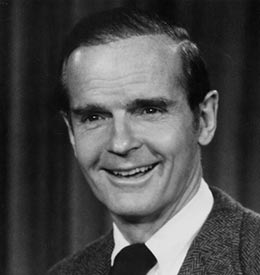
By the late 1970s Enforcement had become the best-known division in the SEC, and Sporkin its avatar. He was lionized in the press and supported by reliable allies on the Commission and in Congress, especially Senator William Proxmire, who on occasion required nominees for Commissioner to promise not to fire Sporkin.(1) It continued to attract lawyers fresh out of law school, drawn by promises of early authority and the opportunity to face off at the start of their careers against “lions of the bar,” as well as more experienced attorneys, some of whom gravitated to the Trial Unit formed in the early 1970s to litigate contentious cases.
Yet a headwind gathered as well, propelled by criticism of the staff’s often daring legal theories, especially its expansive view of “materiality,” and a perception that Enforcement had come to overshadow the other components of the SEC.(2) Some securities lawyers also complained that Sporkin’s lawyers were no longer interested just in enforcing the securities laws, but in imposing their views of corporate morality.(3) It did not help that the Commission also began suffering reversals in the courts.(4)

Two 1977 appointments to the Commission marked this change, first Harold Williams as Chair, then Roberta Karmel, the first female SEC Commissioner. Williams was generally supportive of Sporkin, but he sought to counterbalance the Enforcement division by beefing up the General Counsel’s office, forming a new counseling group to second-guess recommendations from the Divisions. As Daniel Goelzer, later General Counsel, explained it, Williams “wanted the General Counsel’s office to play a more active role in giving the Commission independent advice along the lines of: ‘If this matter is litigated, are we going to win?’.”(5) Karmel was a sharp critic of the Enforcement Division, breaking tradition by dissenting from Commission settlements against attorneys and cases using publicity as a sanction. The pushback did not derail Enforcement; it continued pursuing both high profile cases and the everyday matters which inevitably engaged much of its efforts.
Yet the number of cases it brought shrank toward the end of the decade. According to the 1977 Annual Report, for instance, the SEC that year filed 166 cases seeking injunctions, with 336 injunctions ordered and 715 defendants enjoined. The 1980 Annual Report, in contrast, reported 103 cases, 216 injunctions ordered, and 387 defendants enjoined.(6) Even as this occurred, though, a hint of the major issue of the next decade appeared. In that same annual report, Chairman Williams reported a greater focus on insider trading, which “has apparently increased in recent years.”(7)